Agents Arch
Weekly deep dives on AI agent architecture — LangGraph, LangChain, CrewAI, Google ADK, Managed Agents, and the enterprise patterns that hold them together in production.
-
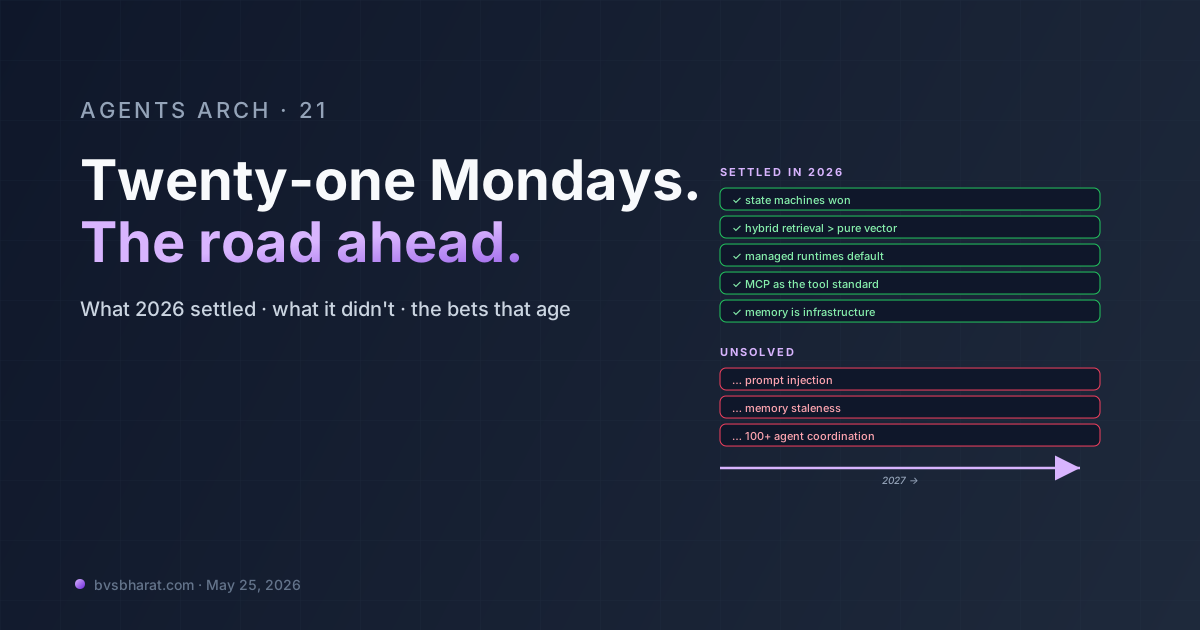
The Future of Agent Architectures: 2026 and Beyond
• 8 min readFive months of weekly posts; five trends worth watching. What 2026 settled, what it didn't, and the architectural bets I'd make if I were starting now.
-
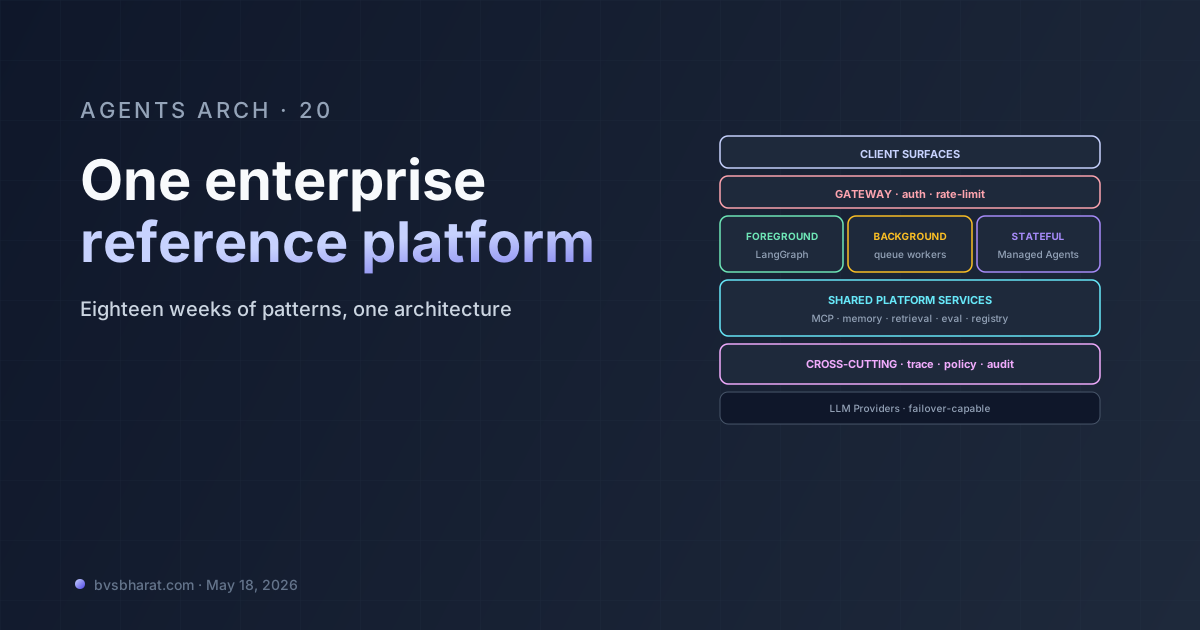
Reference Architecture: A Real-World Enterprise Agent Platform
• 9 min readEighteen weeks of patterns combined into one production-shaped architecture. The full diagram, the repo layout, the contracts between components, and the migration sequence.
-
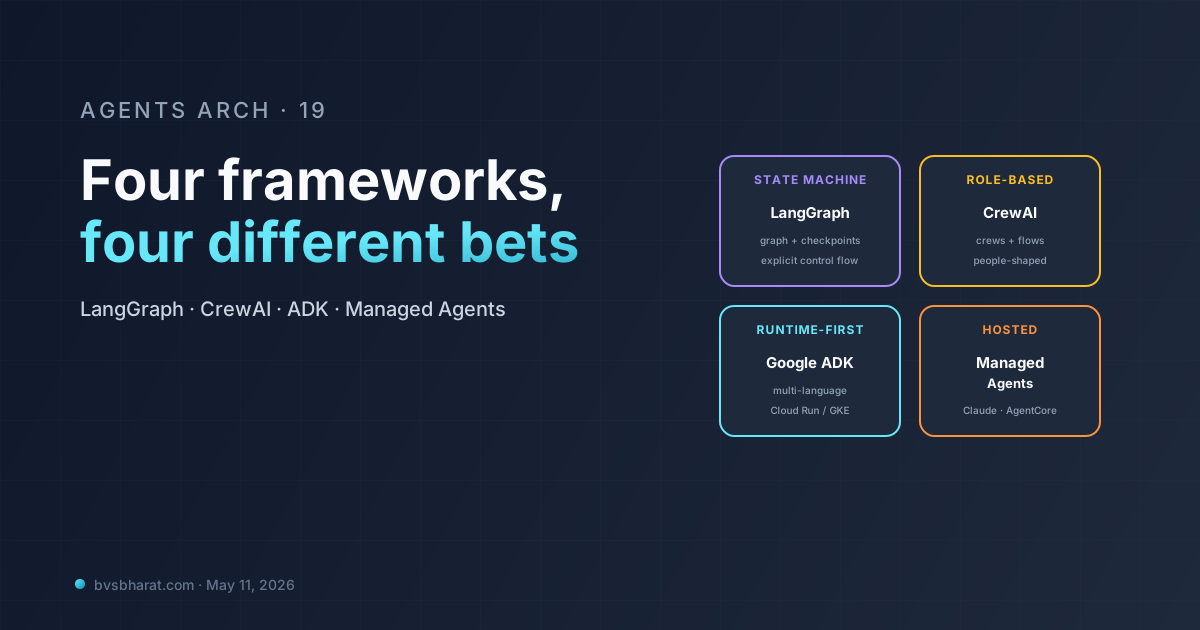
Framework Showdown: LangGraph vs CrewAI vs Google ADK vs Managed Agents
• 7 min readFour agent frameworks, four different bets. The honest comparison — what each gets right, where each leaks, and the decision tree for picking one (or composing several).
-
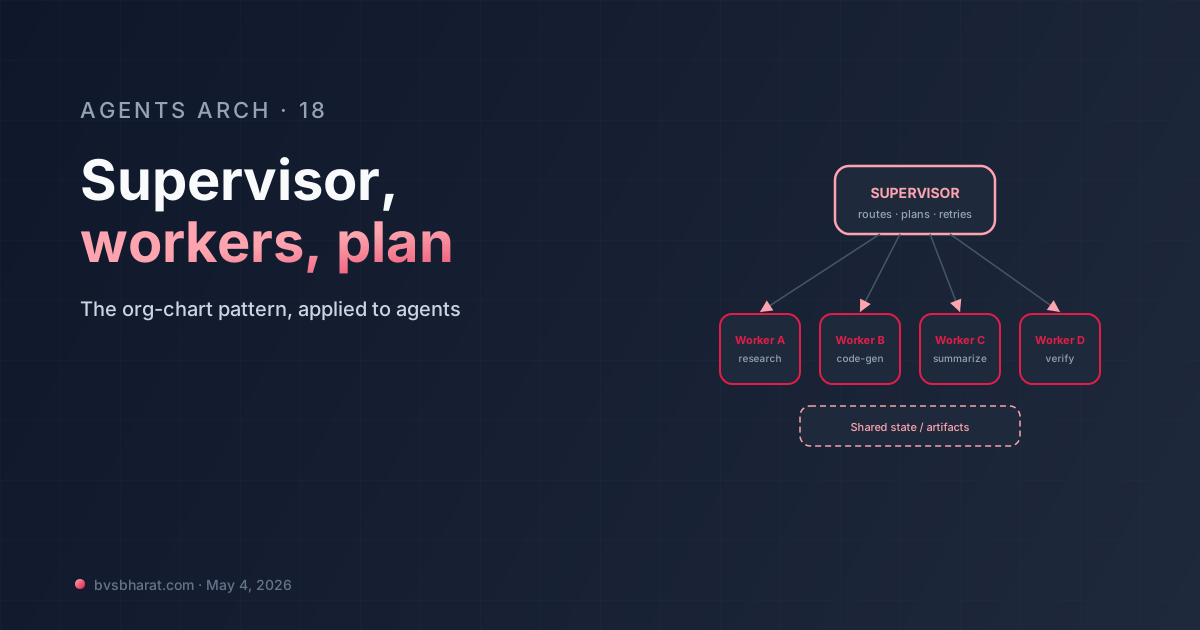
Hierarchical Agent Systems: Supervisors, Workers, and Routing
• 8 min readWhen one agent isn't enough, hierarchy is usually the first answer. Supervisor agents, worker pools, and the patterns that keep multi-agent systems coherent at scale.
-
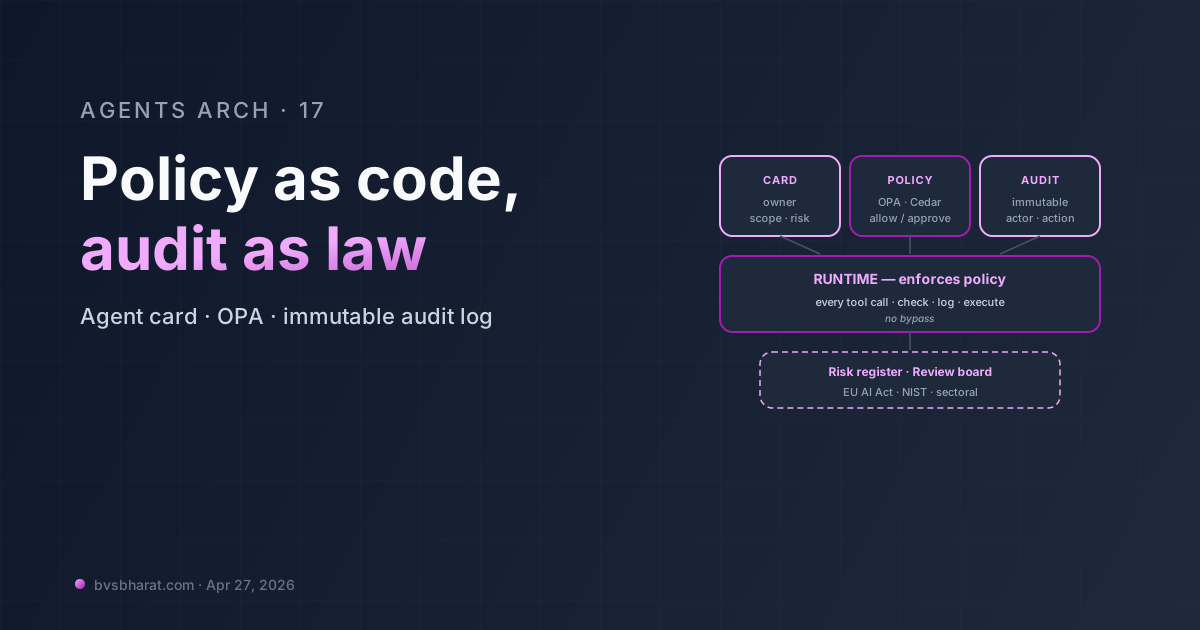
Enterprise Governance for AI Agents: Policy, Audit, and Compliance
• 9 min readWho decides what agents are allowed to do, how those decisions get enforced at runtime, and how to prove it later. The 2026 governance stack — policy as code, audit trails, and the EU AI Act bit.
-
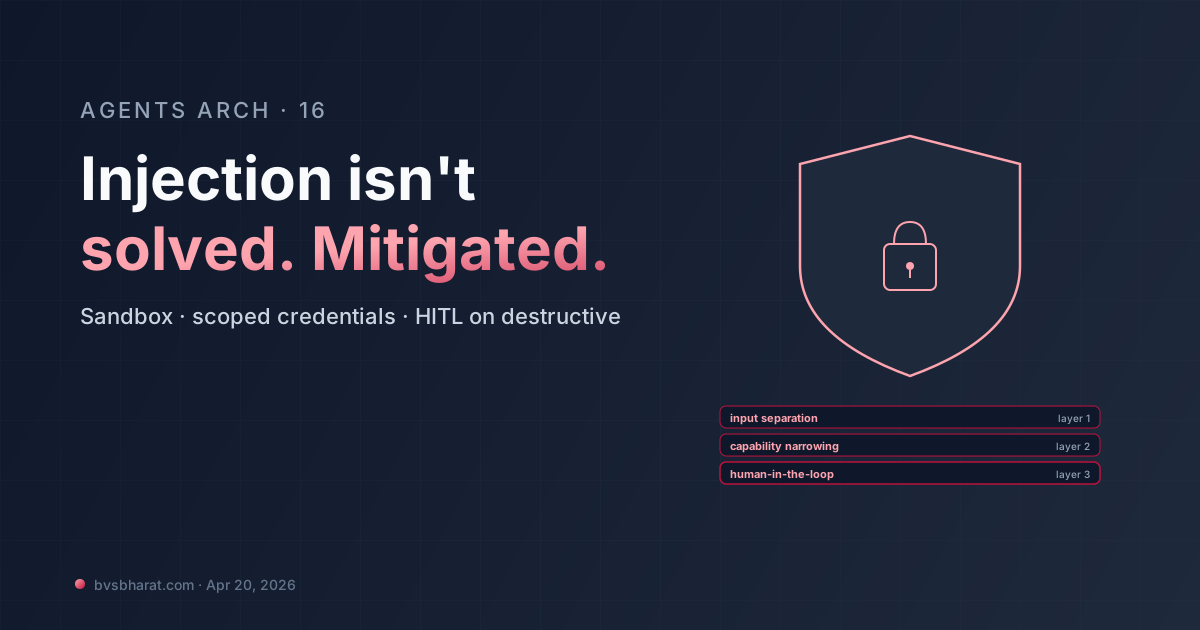
Security for AI Agents: Prompt Injection, Sandboxing, and Authorization
• 9 min readAgents are systems that take instructions from untrusted text and execute actions. The 2026 threat model — prompt injection that's not solved, tool sandboxing, scoped credentials, and authorization that survives contact with the LLM.
-
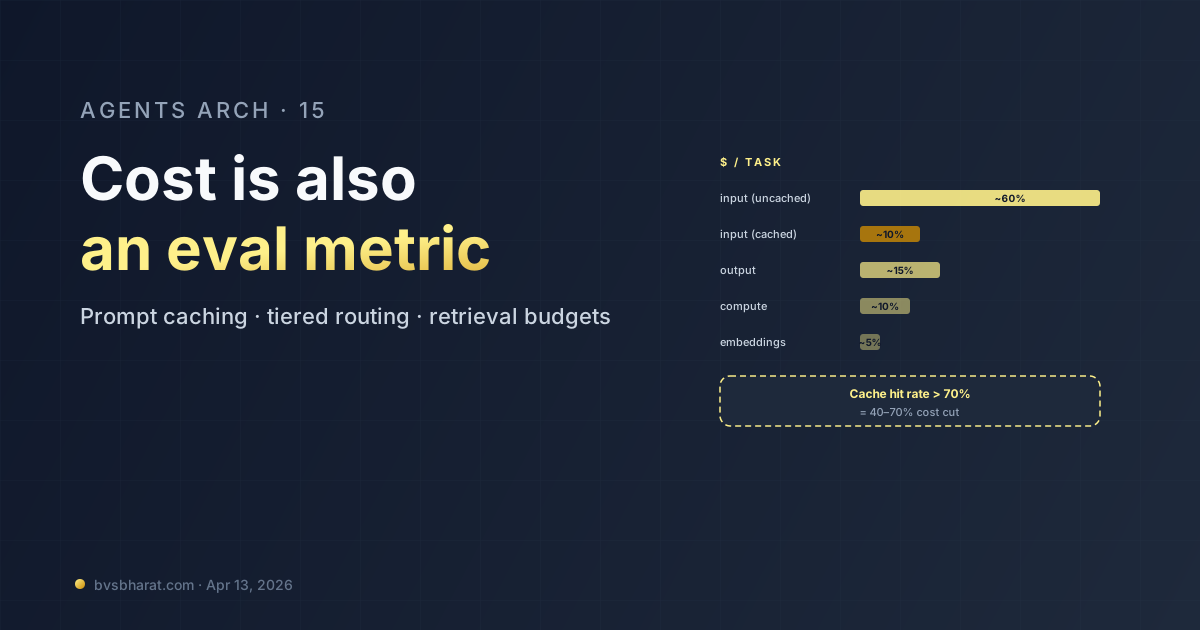
Cost and Latency Engineering for Agent Systems
• 7 min readAgents bill non-linearly. The patterns that matter — prompt caching, tiered model routing, parallel tool calls, retrieval budgets — and the dashboards that catch waste before it ships.
-
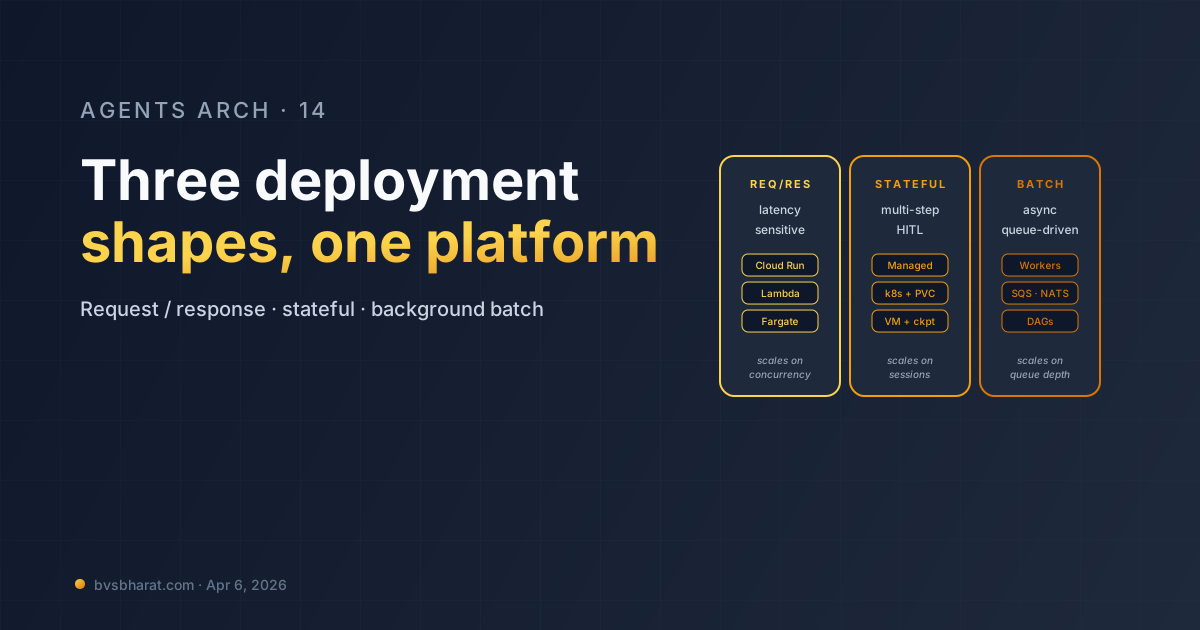
Agent Deployment Patterns: Containers, Serverless, and Stateful Workers
• 9 min readThree deployment shapes for production agents — request/response, long-running stateful, and background batch — with the trade-offs around Cloud Run, Kubernetes, managed runtimes, and queue workers.
-
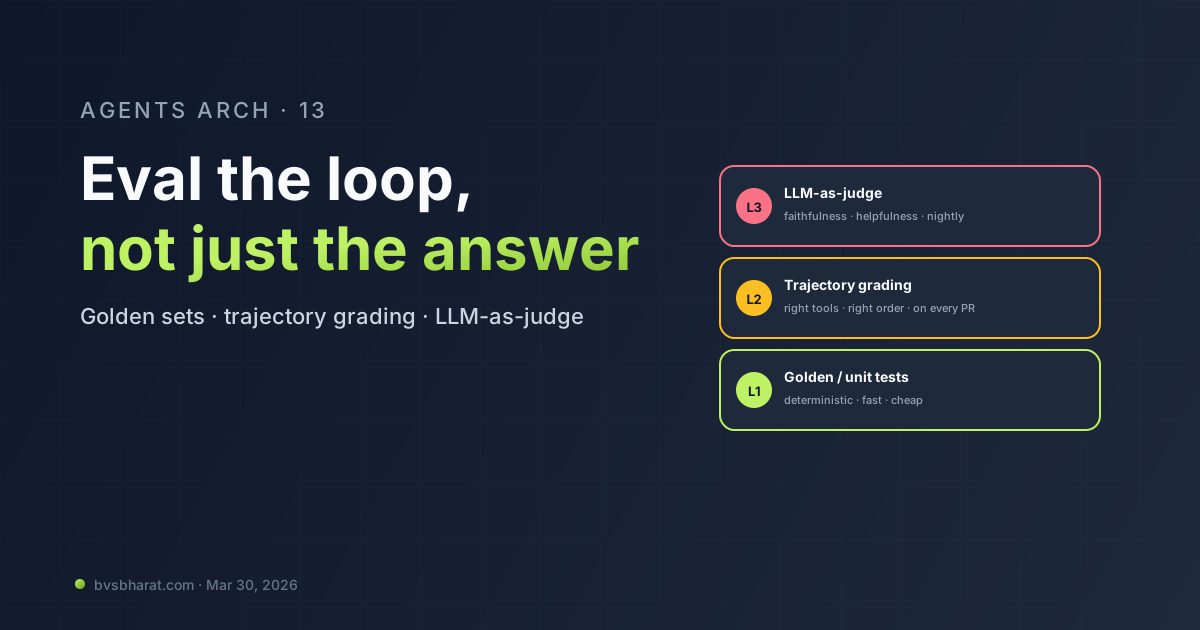
Evaluating Agents: From Unit Tests to LLM-as-Judge Pipelines
• 8 min readYou can't ship agents you can't measure. The 2026 eval stack — task-level scoring, trajectory grading, LLM-as-judge with calibration, and the regression gates that catch silent quality drops.
-
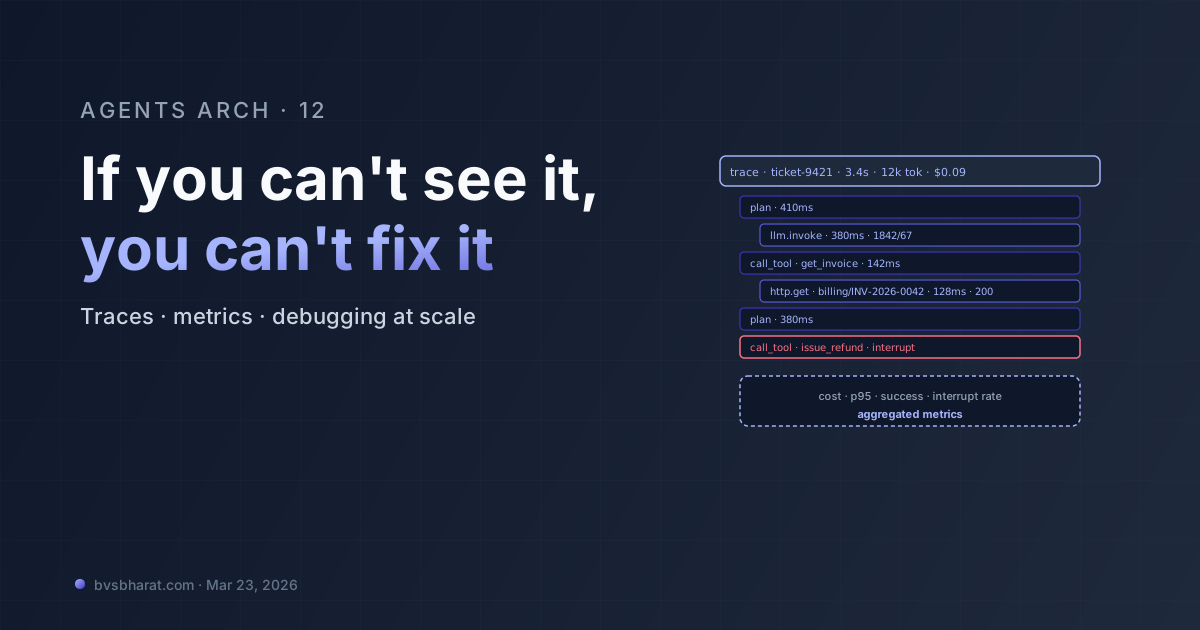
Agent Observability: Tracing, Metrics, and Debugging at Scale
• 7 min readAgents are non-deterministic stateful systems calling external services. You cannot debug them without tracing. The 2026 observability stack — LangSmith, Langfuse, OpenTelemetry — and the metrics that matter.
-
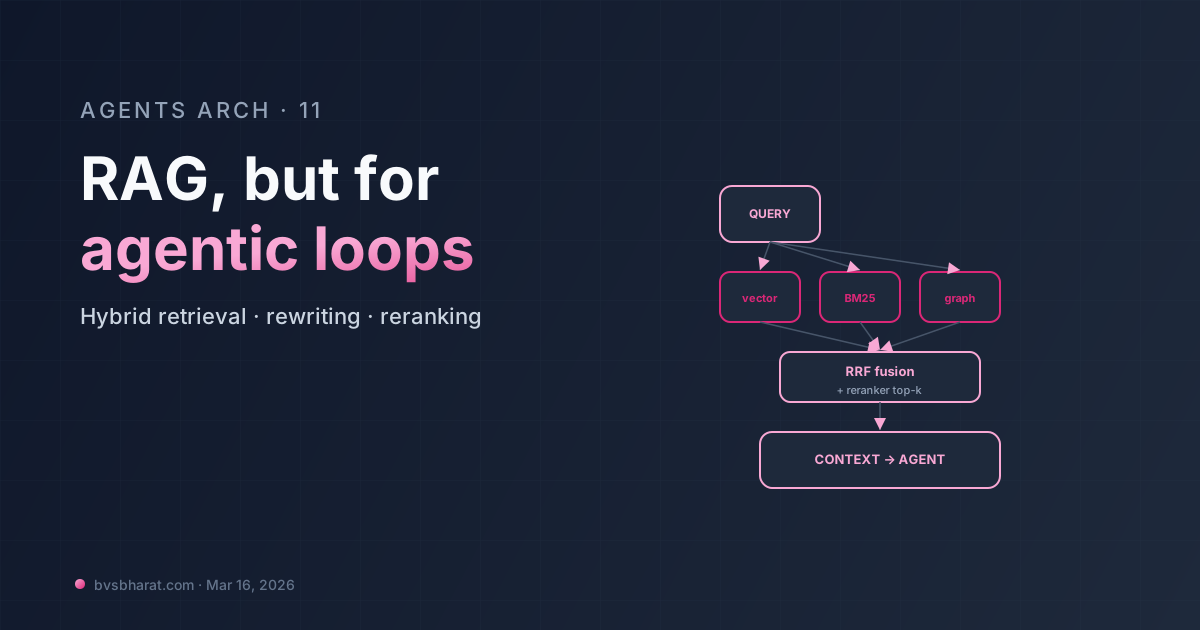
RAG for Agents: Retrieval Strategies that Actually Work
• 9 min readRAG for agents is not RAG for chatbots. Hybrid retrieval, query rewriting, retrieval-as-tool, and the patterns that beat 'top-k from a vector store' in 2026.
-
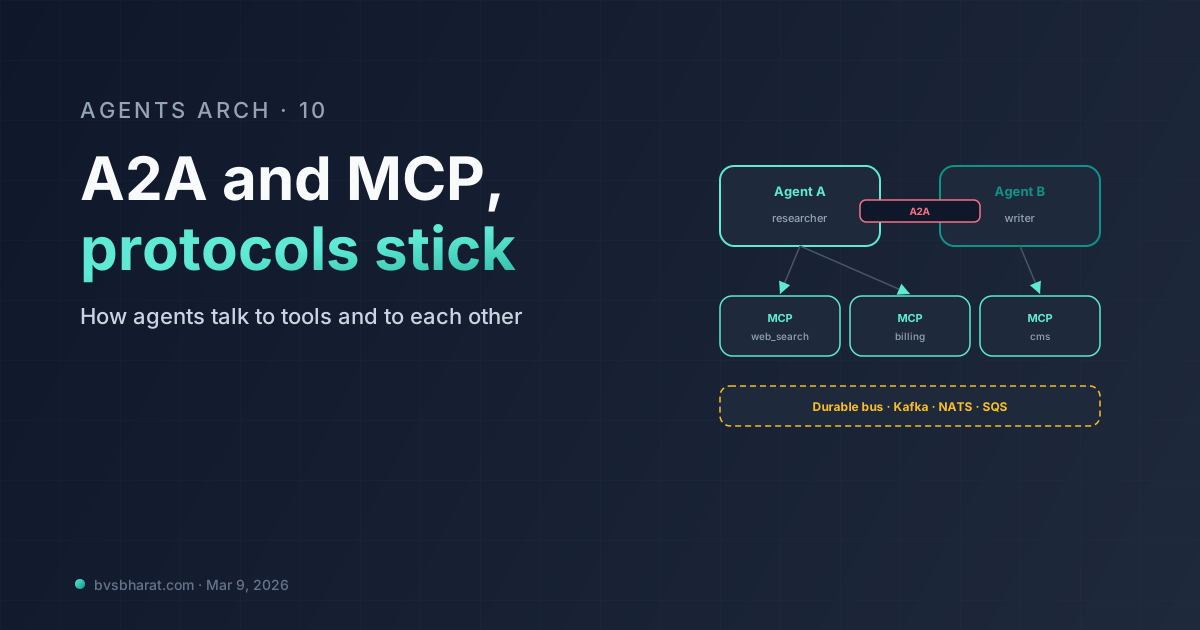
Multi-Agent Communication: A2A, MCP, and Message Buses
• 9 min readWhen one agent isn't enough, how do they talk? A2A for peer-to-peer delegation, MCP for tools, and the durable message-bus patterns underneath multi-agent systems in 2026.
-
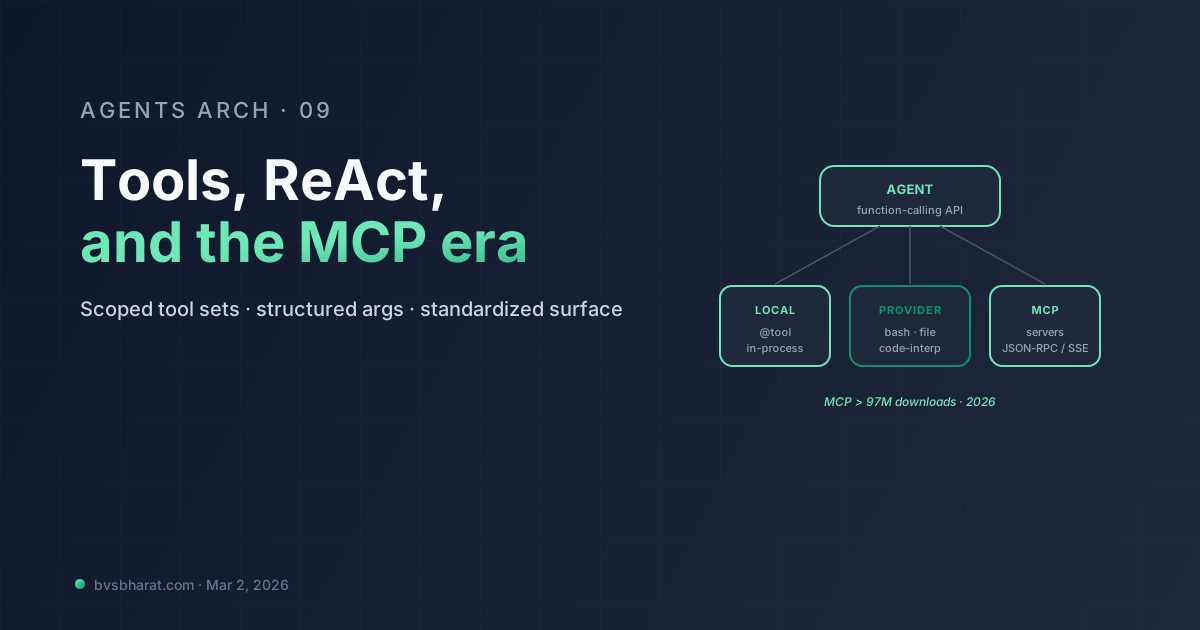
Tool Use Patterns: ReAct, Function Calling, and MCP
• 10 min readTools are what turn a chatbot into an agent. The 2026 stack for tool design — small scoped tool sets, structured arguments, MCP servers, and the failure modes you only see in production.
-
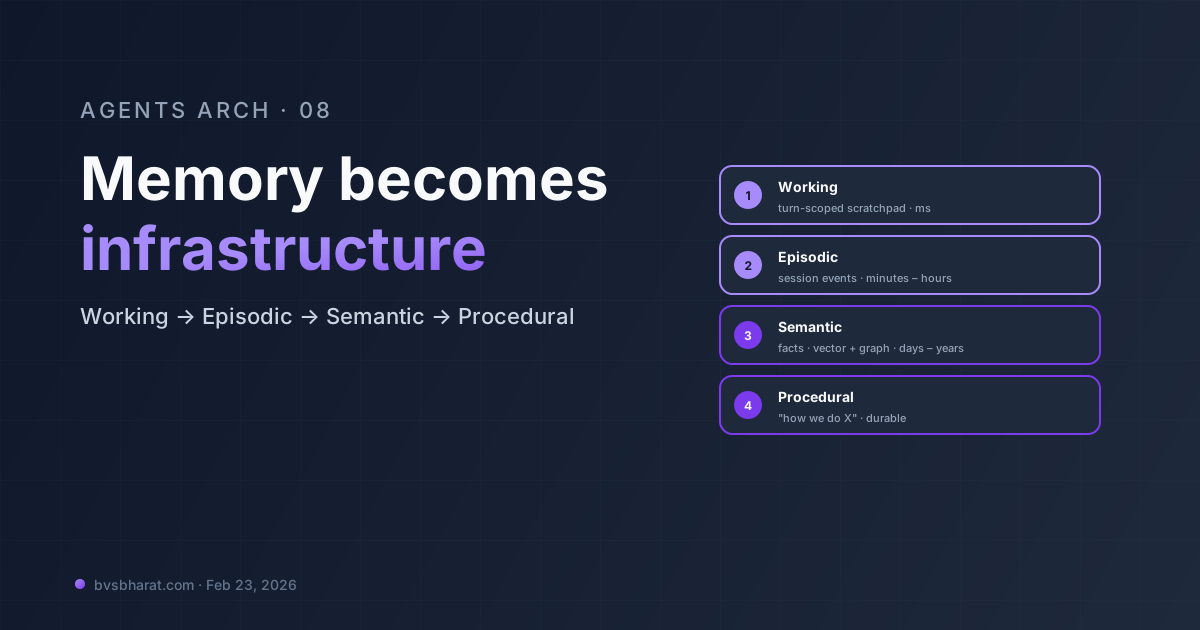
Agent Memory Architectures: Short-Term, Long-Term, and Episodic
• 9 min readThree kinds of memory, four-tier consolidation pipelines, hybrid retrieval that beat pure vector search, and the unsolved staleness problem. The 2026 state of the art for agents that learn over time.
-
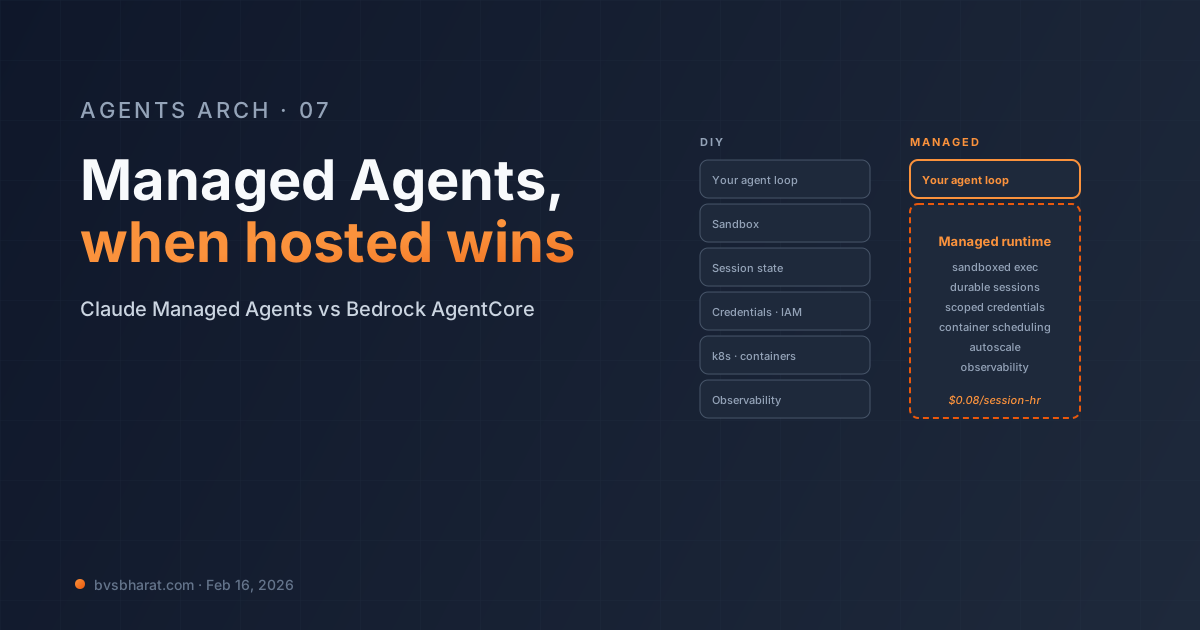
Managed Agents: When Hosted Runtimes Beat DIY
• 8 min readClaude Managed Agents and Amazon Bedrock AgentCore turned 'run an agent in production' from a months-long platform project into a credit-card decision. Here's how they differ and when each wins.
-
Google ADK: An Architectural Tour of the Agent Development Kit
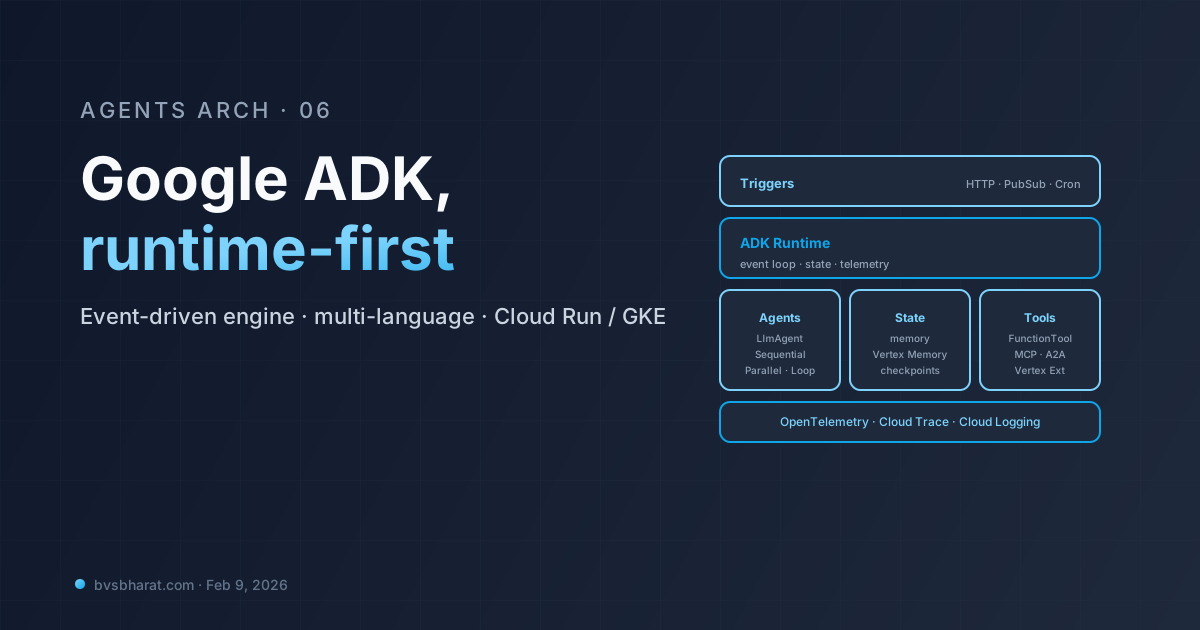
• 9 min readGoogle's Agent Development Kit isn't another agent loop. It's an event-driven runtime, a multi-language SDK, and a deploy target that lines up with Cloud Run and GKE. Here's how the pieces fit.
-
CrewAI: Role-Based Multi-Agent Orchestration in Production
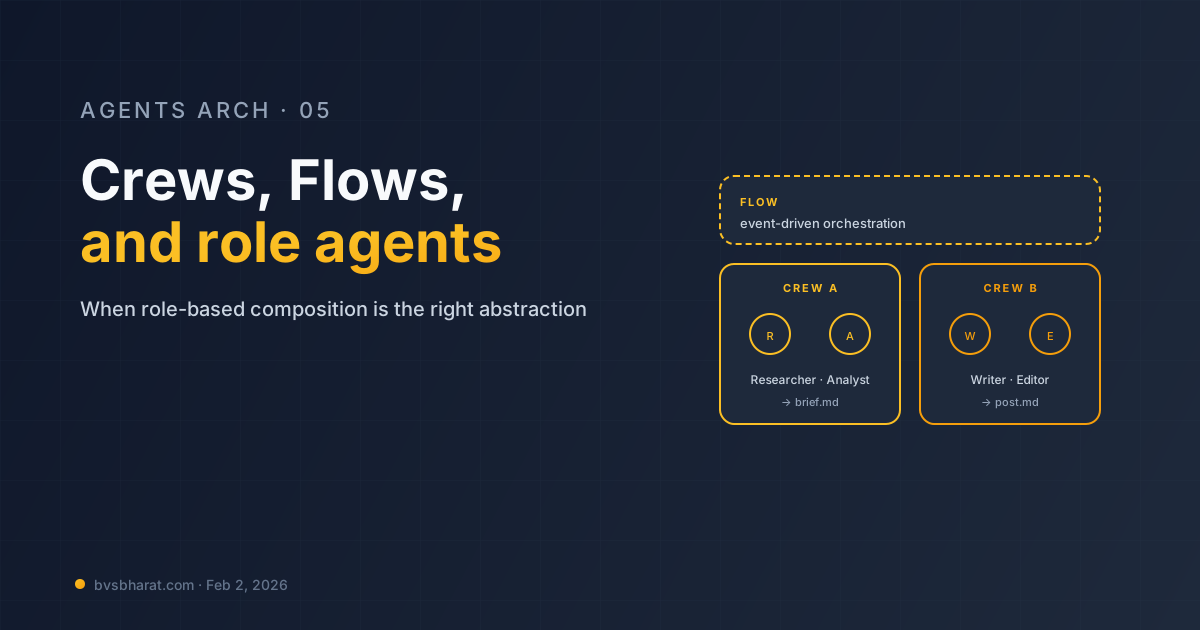
• 8 min readCrews, Flows, and the dual-layer architecture that lets CrewAI hold its own against LangGraph in 2026 — when role-based composition is the right abstraction and when it isn't.
-
LangGraph Patterns: Cycles, Branches, and Human-in-the-Loop
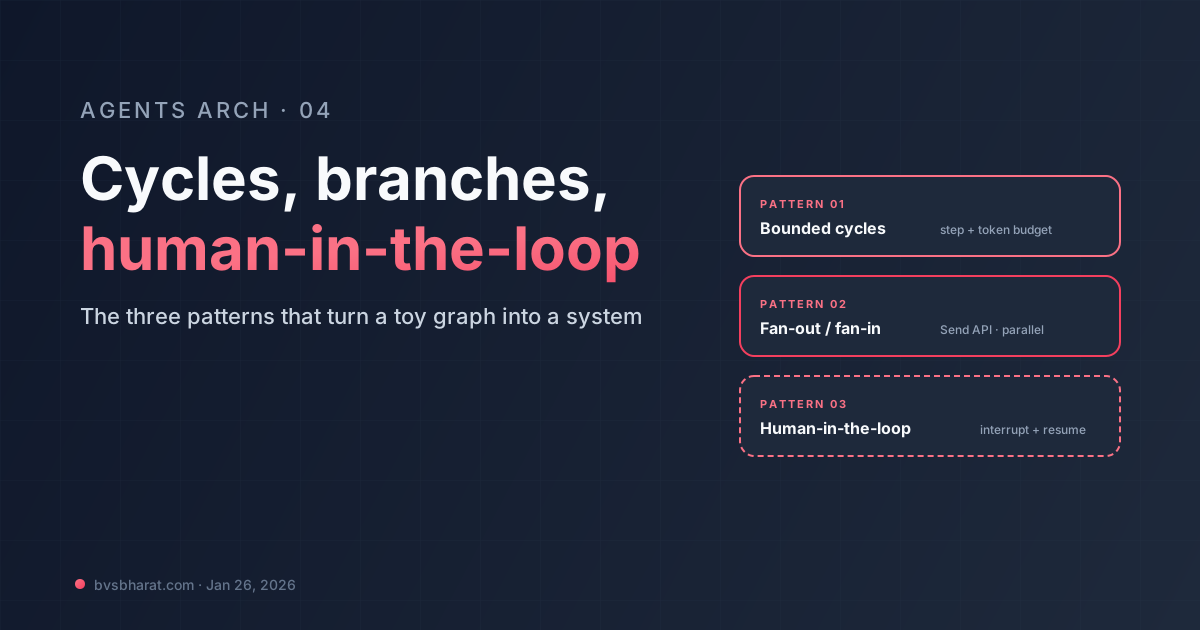
• 9 min readThe three control-flow patterns that turn a toy LangGraph agent into a production system — bounded cycles, parallel fan-out/merge branches, and interrupt-resume human approval gates.
-
LangGraph Deep Dive: State Machines for Multi-Step Agent Workflows
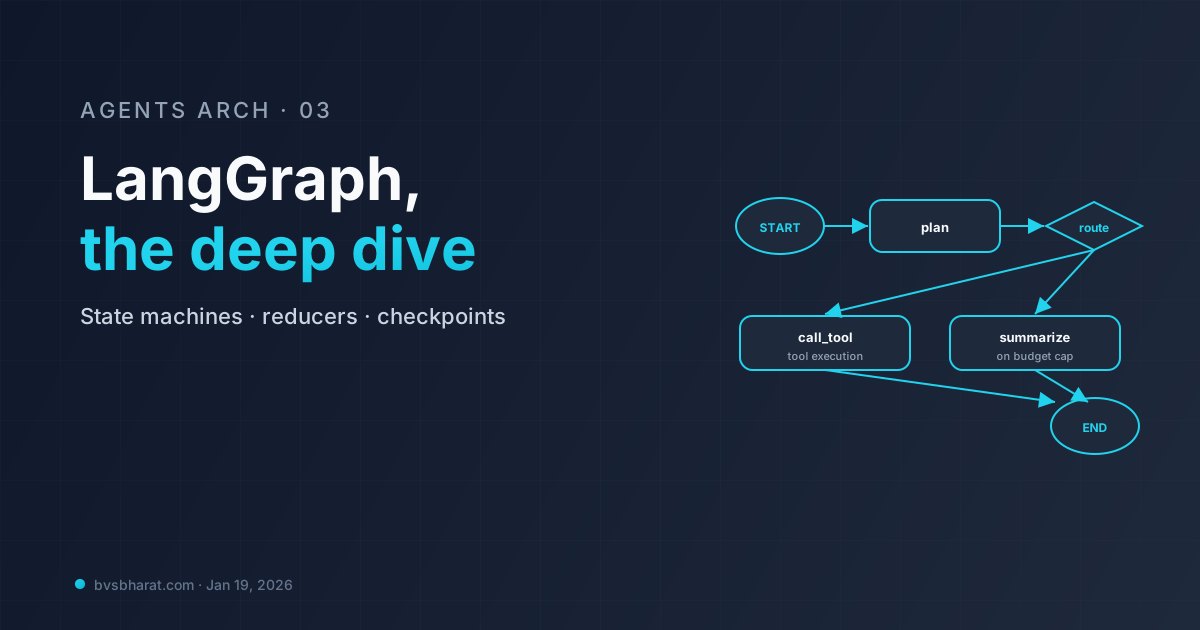
• 8 min readLangGraph turns the agent loop into an explicit state graph — nodes, edges, reducers, checkpointers. The mental model, the type system, and the patterns that make it production-grade.
-
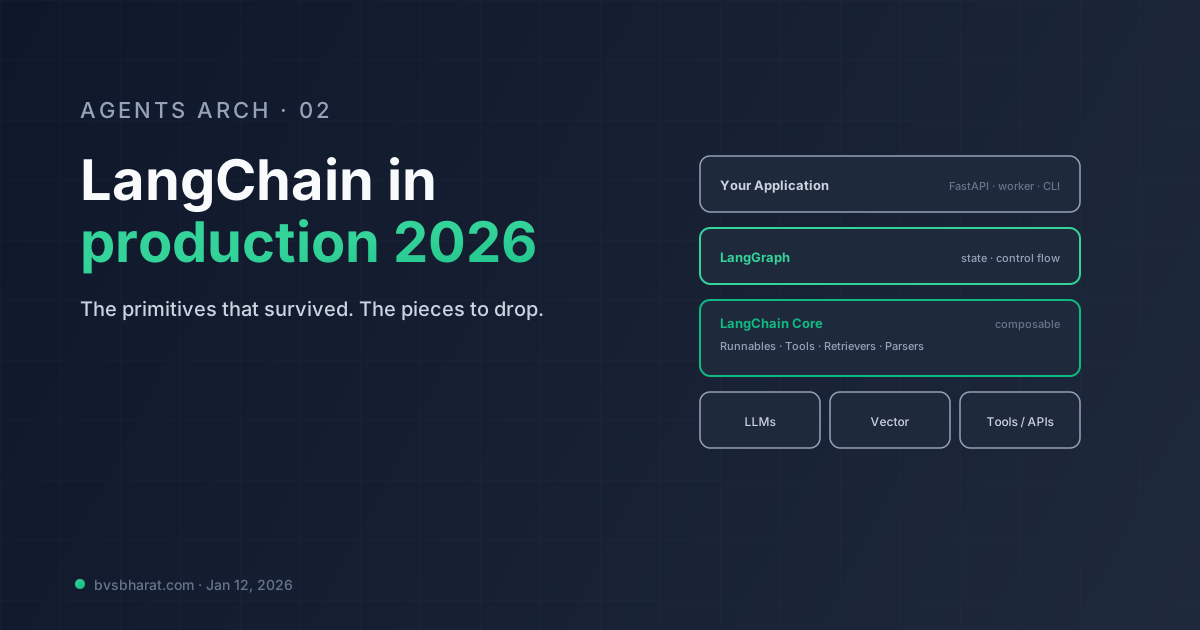
LangChain in Production: Composability and the Parts That Survived
• 7 min readLangChain is no longer the agent framework — LangGraph is. But its primitives (runnables, retrievers, callbacks) became the connective tissue underneath. Here's what to keep and what to drop in 2026.
-
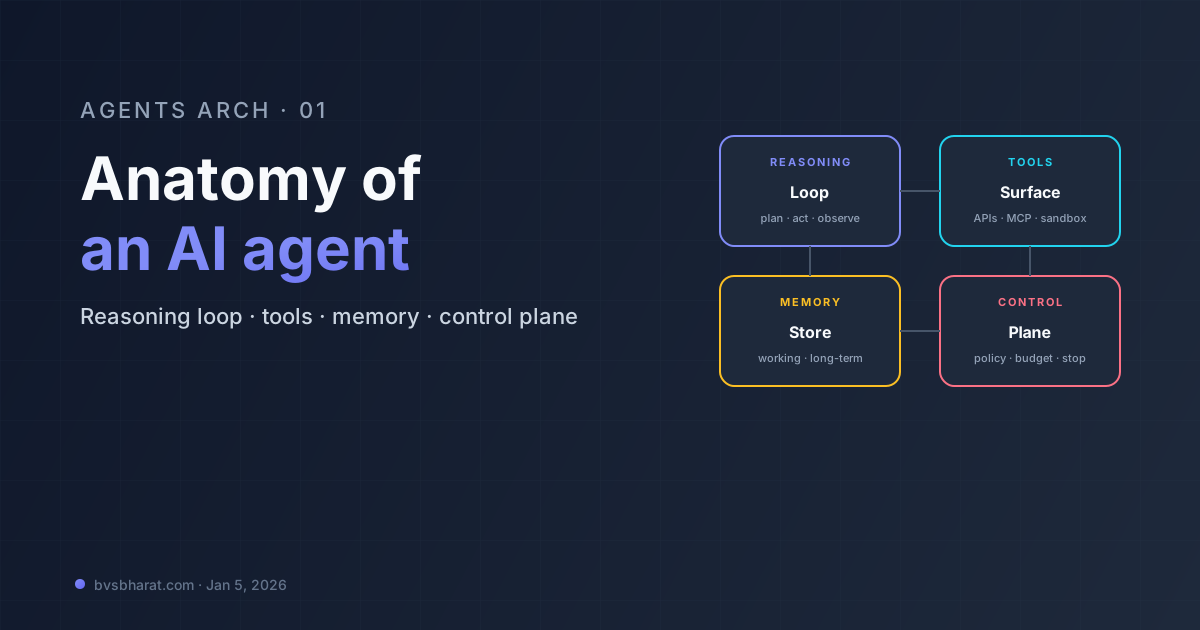
Anatomy of an AI Agent: From Prompt Loops to Production Systems
• 9 min readWhat actually goes inside a production AI agent — the reasoning loop, the tool layer, memory, control flow, and the surface where models meet your business systems.