#agents
55 posts tagged with "agents".
-
The Agent's Action Space Became a Training Variable
• 5 min readJune 2026 research stopped treating an agent's skills and tools as a fixed library and started co-optimizing them with the policy via RL.
-
What Survives Compaction Is the Real Context Window
• 6 min readJune's research reframes context management: the discard step is now where both agent quality and safety quietly leak.
-
The Cheapest Agent Upgrade Is a Stop Condition
• 5 min readMid-2026 data keeps pointing the same way: bounding an agent's loop beats unleashing it. Turn limits and budgets buy more than a bigger model.
-
Ten Agents, Three Merges: June's Tooling Fixed Fan-Out, Not Review
• 5 min readThis month's agent tools made spawning parallel coding agents trivial. The constraint moved to the merge decision—and that doesn't parallelize.
-
Agent Security Moved to the Action Layer
• 6 min readRuntime authorization — intercepting tool calls before they execute — is becoming the real security boundary for agents, and a standard is forming fast.
-
Computer-Use Agents Crossed Human Parity. They Still Click Too Much.
• 6 min readFrontier models now beat the human baseline on OSWorld-Verified — but the benchmark just got rebuilt, and the architecture quietly shifted off pixels.
-
Your Agent Catches Everyone's Mistakes But Its Own
• 5 min readNew research says self-correction fails because of the role label on the claim, not the claim's content. The fix is structural, and cheaper than you think.
-
Your Agent's Benchmark Score Is an Experiment, Not a Fact
• 6 min readRecent work shows a single agent leaderboard number is wrong three independent ways: it's noisy, it's overfit, and the judge measuring it is unreliable.
-
Agents Are Learning the Memory Policy You Used to Hand-Code
• 5 min readA June 2026 wave moves the store/evict/retrieve decision from heuristics to a trained policy, and pushes consolidation into an offline sleep phase.
-
Injection Stopped Being a Single-Turn Problem
• 5 min readOnce agents got long-term memory, a one-time prompt injection could survive across sessions. Mid-2026 research shows both the attack and the defense moving up the stack.
-
The Agent Stopped Waiting to Be Asked
• 6 min readJune 2026 mainstreamed always-on agents that listen to event streams instead of prompts — and that one change breaks the trigger, trust, and latency models all at once.
-
The Context Window Grew a Memory Manager
• 5 min readA June 2026 wave of papers shows pruning beats full context on accuracy and cost — and that eviction is becoming a deterministic, cache-aware system, not a summarize call.
-
The Skill Supply Chain Got Poisoned Before It Got Secured
• 5 min readAgent skills are an executable supply chain that runs with your agent's full privileges — and the first wave of benchmarks shows our defenses see only half the attacks.
-
Optimization Is Moving From Weights to English
• 5 min readRecent work turns skills, harnesses, and context into objects you can search over and benchmark — optimizing the English around a frozen model instead of the model.
-
Code Is the Action Space Now
• 6 min readFrameworks are quietly replacing JSON tool calls with generated code. That collapses turns and tokens — and pushes isolation down to the single call.
-
The Harness Got a Name
• 5 min readA new survey and Microsoft's BUILD 2026 release both landed on the same idea: agent capability is leaving the model and moving into the harness.
-
Skills Are the New SDK
• 5 min readOpenAI killed its visual Agent Builder the same week Google shipped first-party skills. The agent capability layer just consolidated.
-
The Agent Doesn't Know When It's Failing
• 6 min readNew benchmarks measure calibrated refusal and premature self-stops, and the data says agent confidence signals are broken. Here's how to engineer around it.
-
The Agent Got Its Own Account
• 6 min readIn ten days of June 2026, agents got their own budget, their own permission manifest, and their own credentials. The agent is now a principal, not a feature.
-
The Environment Became the Curriculum: Agent RL's Synthesis Turn
• 6 min readAgent RL's bottleneck moved from data to reward to the environment itself. The newest research tries to take humans out of environment-building entirely.
-
Data Agents: The Hard Part Was Never the SQL
• 5 min readAnthropic and OpenAI independently shipped internal data agents and reached the same conclusion: discovery beats generation, and structure beats access.
-
The Trajectory Became the Cost Center
• 5 min readA wave of mid-2026 research stopped trying to make the model cheaper and started compressing the agent's own trajectory — at the observation, action, and skill level.
-
Compiling the Agent Loop Away: Late May's Anti-Orchestration Turn
• 6 min readThree late-May 2026 papers attack the agent loop itself — compiling it into weights, speculating through idle time, and letting agents rewrite their own source.
-
The Agent Writes the Orchestrator Now: Parallelism's Late-May Turn
• 5 min readLate May 2026 made parallel fan-out the agent's main scaling axis — orchestration moved into code, tests became the gate, and the meter started running.
-
State, Shells, and Shortcuts: The Agent Stack Spent Late May Fixing Its Foundations
• 6 min readMCP went stateless, a wave of coding-agent RCEs landed, and a new benchmark measured reward hacking — the three properties that make an agent useful all became liabilities.
-
Agents Are Writing Their Own Skills — and Retrieval Is the New Bottleneck
• 5 min readMay 2026's skill-library research shows agents can now accumulate reusable capabilities, but retrieving and adopting them is harder than generating them.
-
Where the Agent Loop Runs: The Control-Plane Split of May 2026
• 5 min readThe week of May 19 separated the agent loop from tool execution. Whoever hosts the loop now owns your latency, reliability, and lock-in.
-
Capability Went Up. Reliability Didn't. That's the Agent Problem Now.
• 5 min readNew work argues agents are measured wrong: accuracy keeps climbing while consistency, robustness, and predictability barely move. The fix is architectural.
-
Verification Is Becoming the Agent's Substrate
• 5 min readThe agents scaling fastest in mid-2026 share one trait: their output lands in a column a machine can check. The verifier, not the model, is the moat.
-
Where the Reward Goes: Agent RL's Reward-Design Split
• 5 min readRecent papers disagree on whether to reward agents per-turn or only at the end — and the answer reveals where RL for agents is actually headed.
-
The Agent Benchmark Reckoning of May 2026
• 6 min readSTATE-Bench, DeepSWE, Agent Island, SWE-bench Live: a wave of new evals exposes how much the old leaderboards were inflating.
-
The Agent Is a Workload, Not a Script
• 6 min readMid-May 2026 quietly shipped the operations layer for agents — versioned environments, runtime drain, behavior-based evals, portable skills.
-
The Agent Trust Stack Just Got Built: Three Weeks in May 2026
• 6 min readSkill cards, self-hosted sandboxes, MCP tunnels, computer-use verifiers, and a Five Eyes warning all landed in twenty-one days. The boring perimeter around capable agents finally has shape.
-
The Browse-Click-Compare Web Is Ending. Here's What Replaces It.
• 10 min readTwenty minutes of tabs vs. five minutes of prompt. The traditional web wasn't designed for humans — it was designed for mice. The agent-native web is quietly dismantling the parts that never made sense.

-
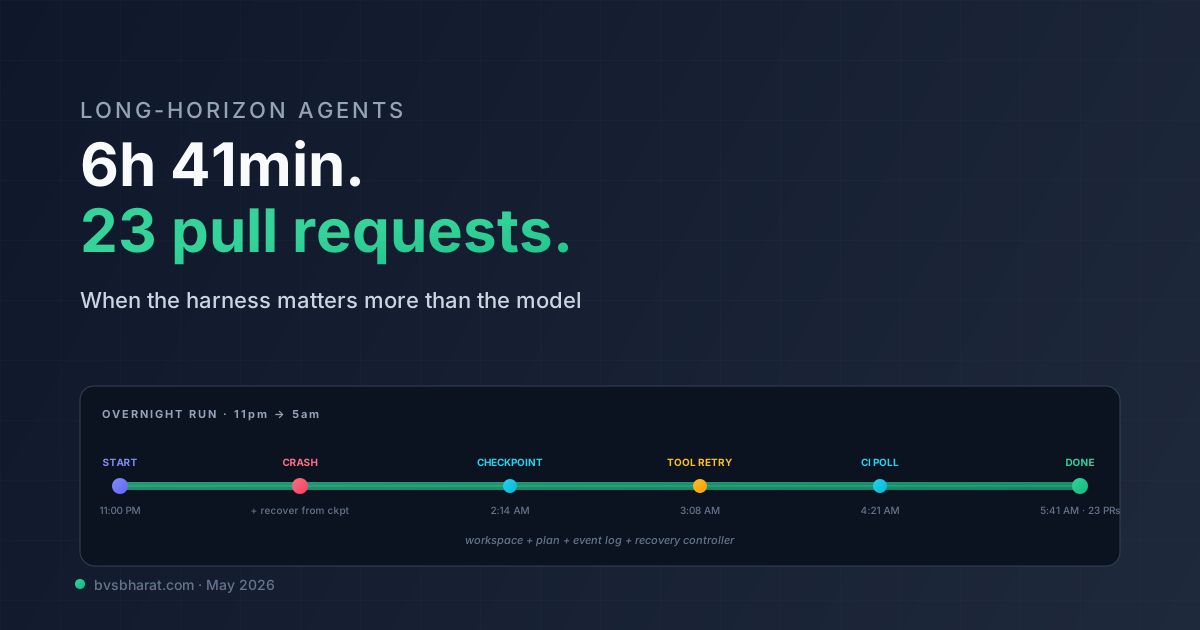
Long-Horizon Agents: When Tasks Take Hours
• 11 min readSix-hour agent runs are now real. The harness — checkpoints, durable state, recovery — matters more than the model. A field guide to the long-running pattern.
-
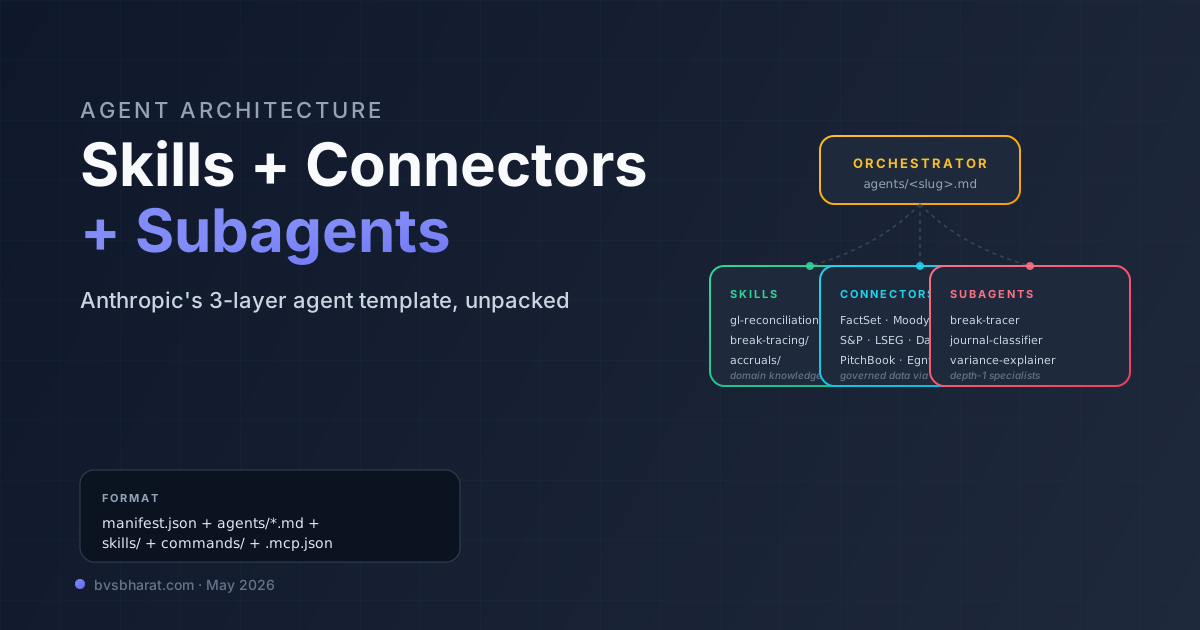
Skills, Connectors, Subagents: Anthropic's 3-Layer Agent Template
• 10 min readAnthropic just shipped 10 financial services agent templates. The interesting part isn't the templates — it's the three-layer architecture quietly becoming the standard for enterprise agents.
-
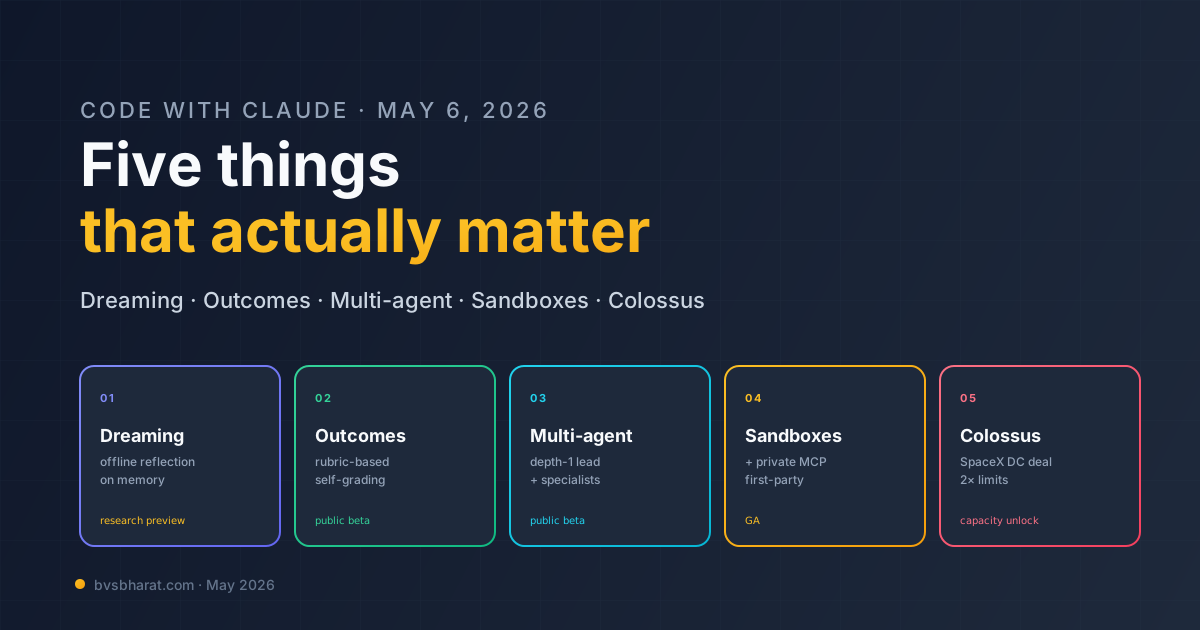
Code with Claude 2026: Five Things That Actually Matter
• 9 min readAnthropic shipped a lot on May 6 — Managed Agents updates, Dreaming, Outcomes, Multi-agent Orchestration, and a SpaceX partnership. The signal-to-noise filtered down to five things that change how you build.
-
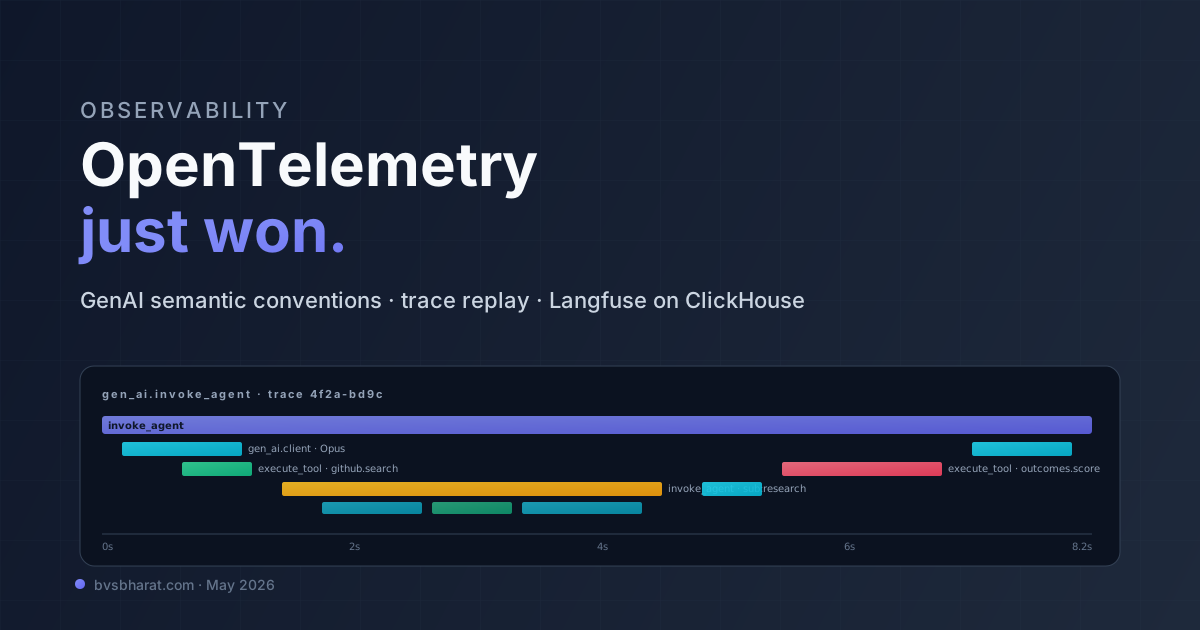
Agent Observability in 2026: Tracing, Replay, and Why OTel Won
• 9 min readLangfuse got acquired by ClickHouse. Helicone hit maintenance mode. OpenTelemetry standardized LLM tracing. The observability stack for agents reshuffled in three months. Here's what it looks like now.
-
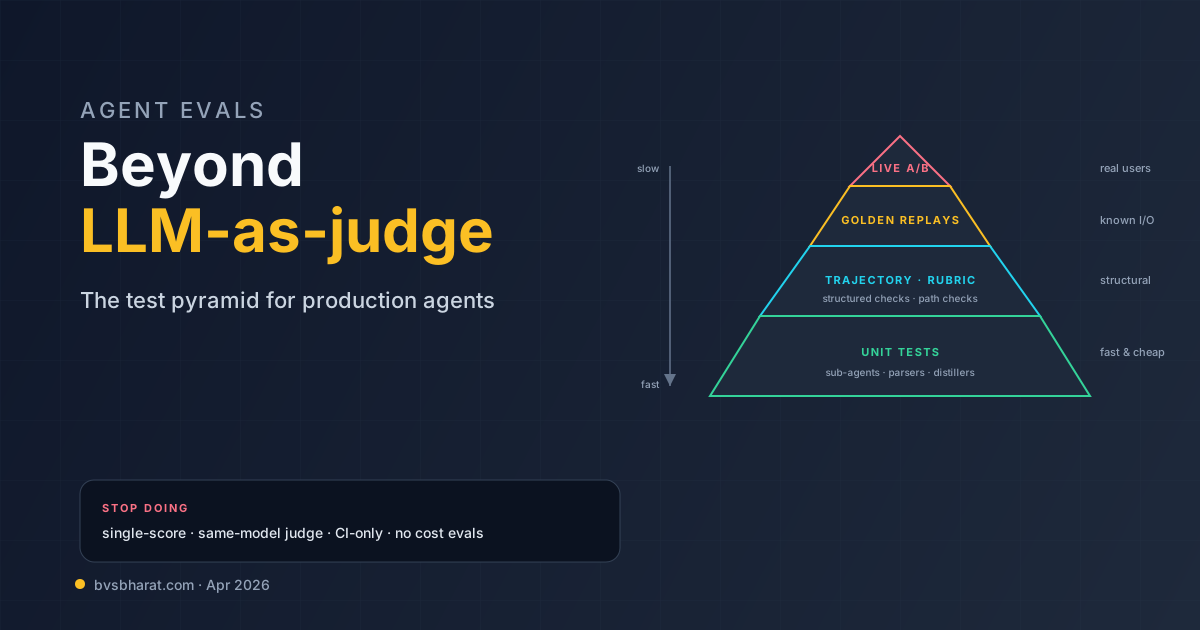
Agent Evals in 2026: Beyond LLM-as-Judge
• 10 min readVibes-based scoring is finally dying. Trajectory eval, rubric eval, golden replay, and the test pyramid that production agent teams actually run.
-
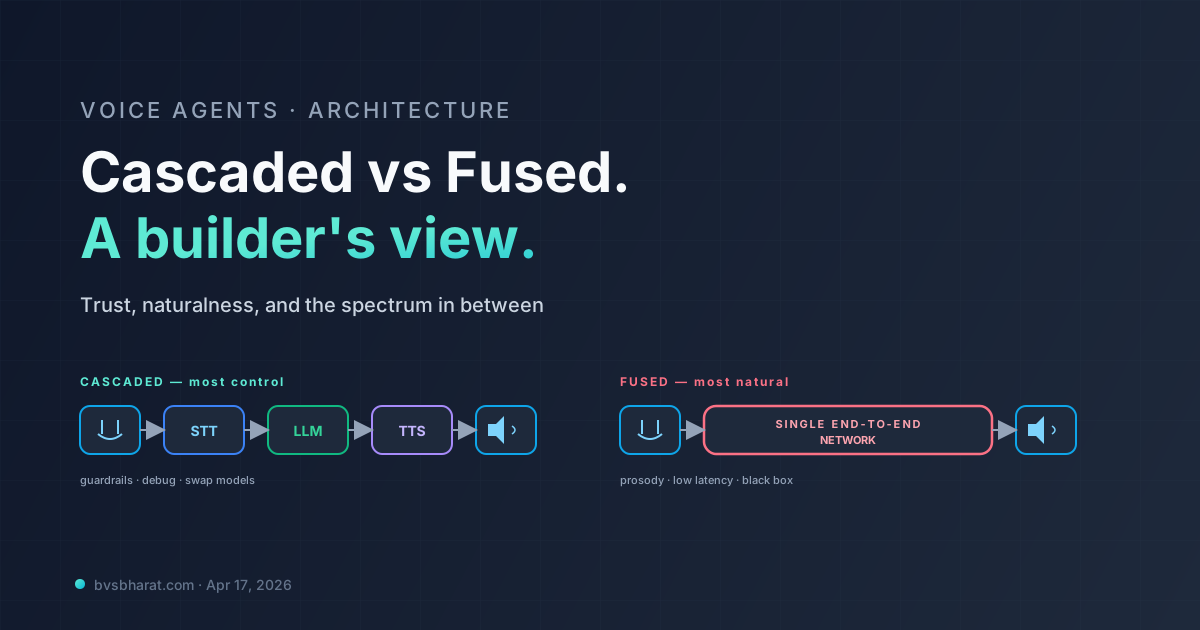
Cascaded vs Fused Voice Agents: A Builder's Perspective on Architecture Choices
• 16 min readDeep dive into voice agent architectures. Why cascaded models give you control and fused models trade complexity for naturalness. What we're learning from shipping production agents at scale.
-
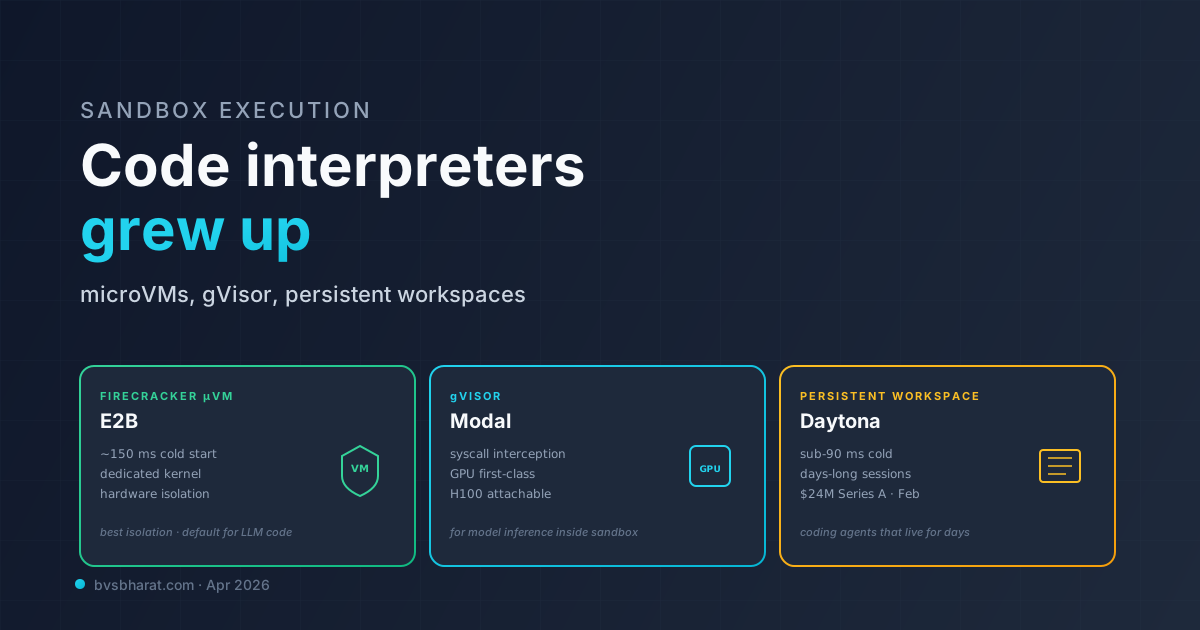
Sandbox Execution: Code Interpreters Grew Up
• 11 min readFirecracker microVMs, gVisor containers, persistent workspaces, and the $24M Series A nobody quite expected. The sandbox layer beneath every serious agent — and how to pick the right one.
-
How to Make Voice Agents Sound Human: A Practical Guide to Realistic Speech Prompting
• 9 min readWhy your cascaded voice agent sounds robotic — and how to fix it with concrete examples, SSML pause patterns, emotion tags, and personality-as-behavior prompting techniques.

-
Cost-Optimized Agent Architectures: Cutting Spend 10x Without Losing Quality
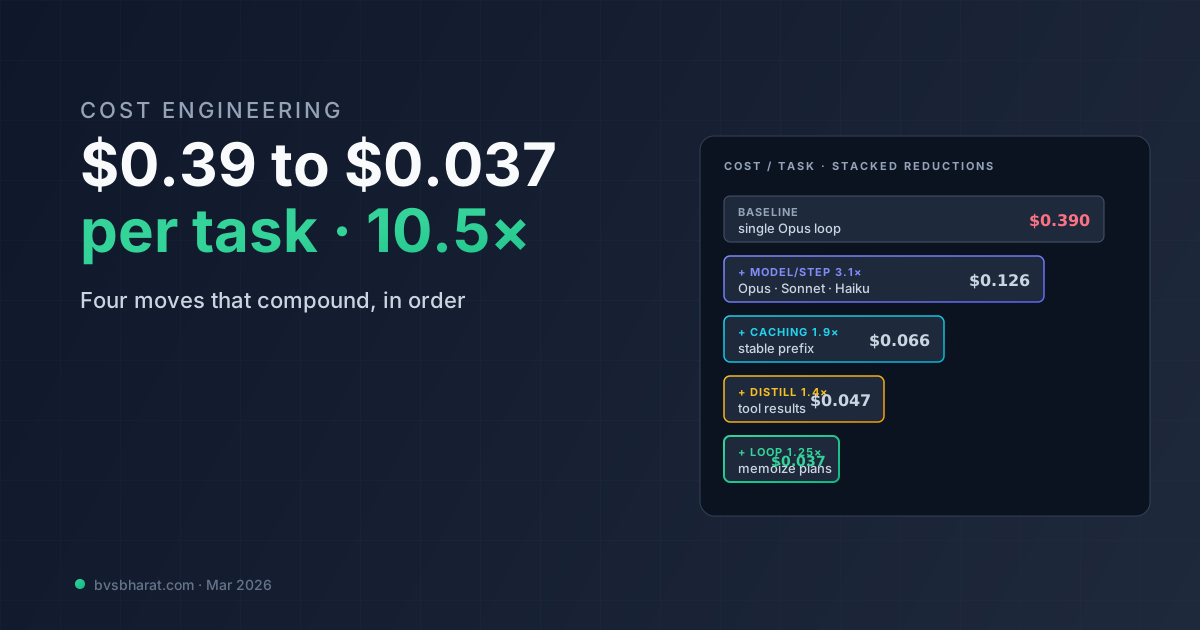
• 9 min readCaching, routing, distillation, and per-task model selection. The four moves that take a $0.40/task agent to $0.04/task without anyone noticing the difference.
-
Web Research Agents: The State of the Art, March 2026
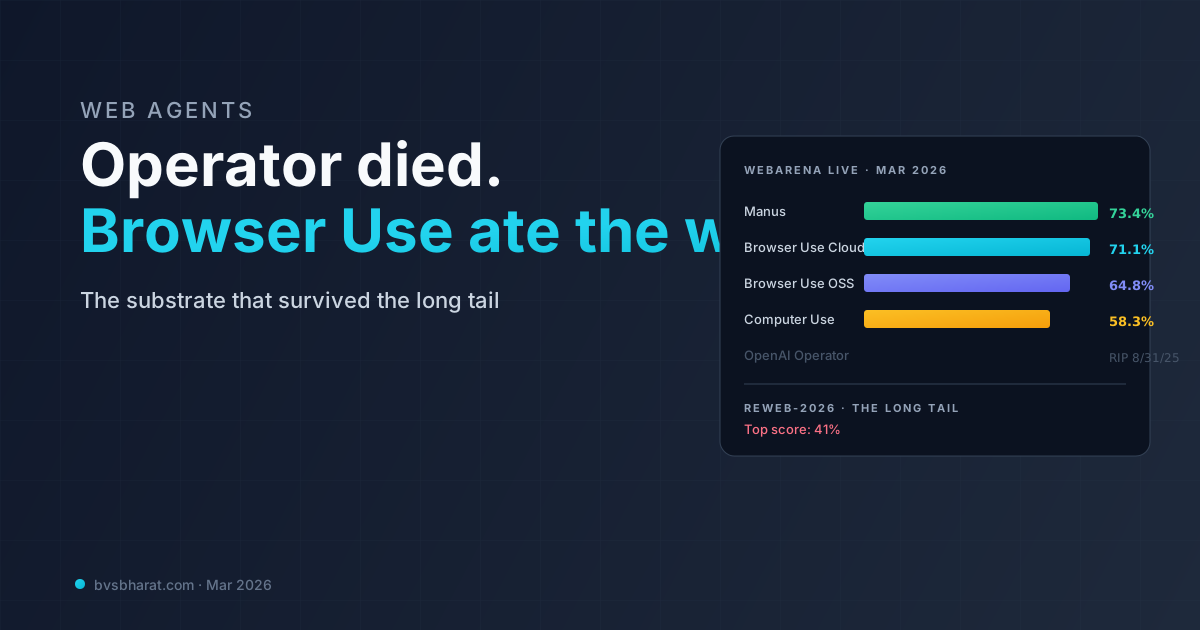
• 10 min readOperator died, Browser Use became the default substrate, Manus shipped at scale, and the gap between demo and reliable production narrowed considerably. A field report.
-
Deep Agents: Planner / Executor / Critic Becomes the Default
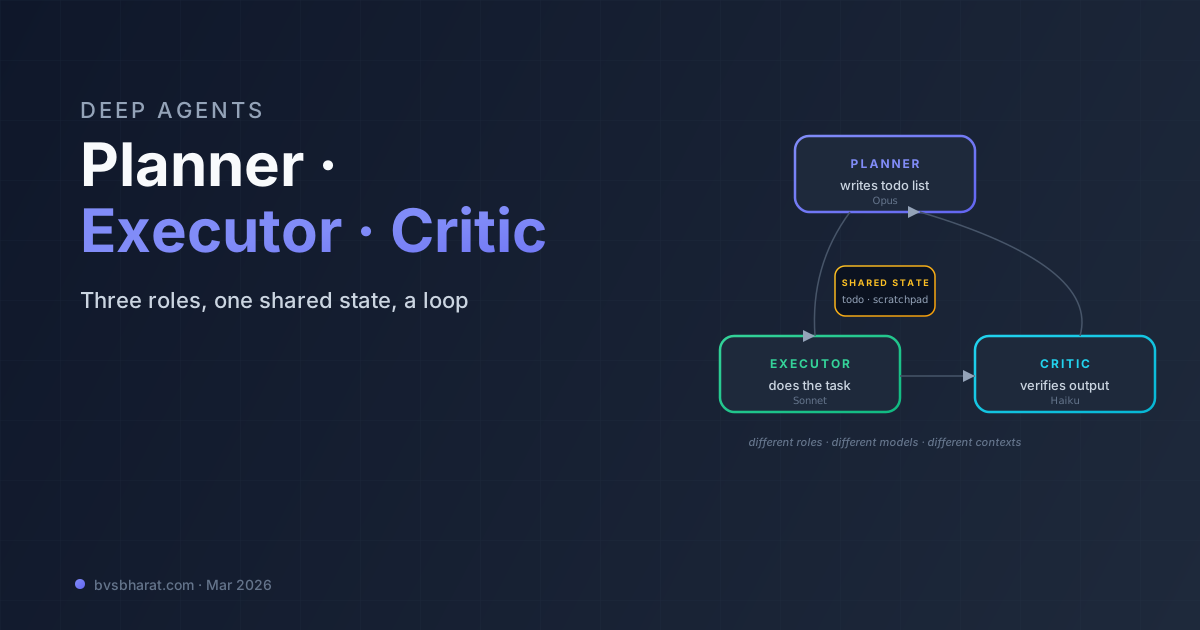
• 10 min readThe three-role pattern that powered Manus, then LangChain Deep Agents, then half the production agents shipping in early 2026. Why it works, when it doesn't, and how to actually build one.
-
Context Engineering: The Discipline That Makes AI Agents Actually Work
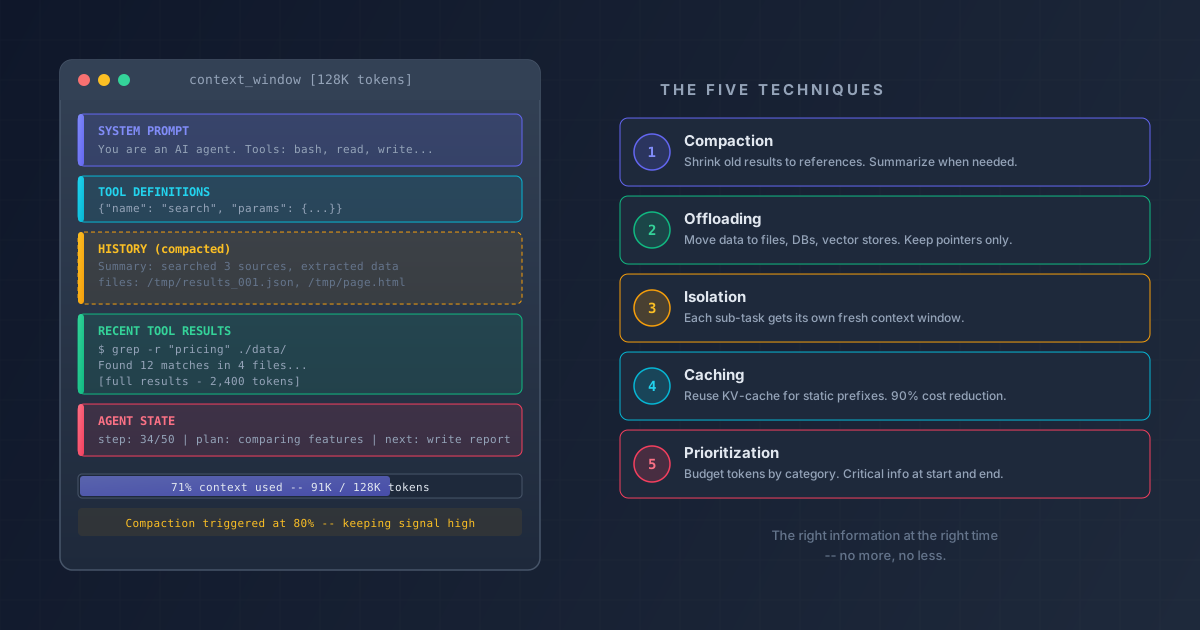
(updated) • 16 min readA deep dive into context engineering — the techniques that separate toy demos from production AI agents. Covers compaction, offloading, isolation, caching, and prioritization with real examples from Manus, Claude Code, and Devin.
-
Training a Virtual Company: A Deep Dive into Multi-Agent Reinforcement Learning with OpenEnv & Unsloth
• 29 min readHow exploring LLM fine-tuning led to building a Gymnasium-compatible RL environment where 7 LLM-powered agents run a company — trained with GRPO + LoRA on Qwen 2.5 14B — and what we learned about reward design, emergent collaboration, and the future of agentic AI.
-
MCP Has a Tools Problem — And Code Mode Might Fix It
• 7 min readAI agents are drowning in tools. The more APIs you connect via MCP, the worse your agent performs. Here's why, and what Code Mode changes.
-
The AI App Paradox: Why We're Drowning in Tools but Starving for Experience
• 2 min readWe've been so obsessed with what AI can do that we forgot about how it feels to use it. The AI experience layer is the next frontier — not the model, not the capabilities.
-
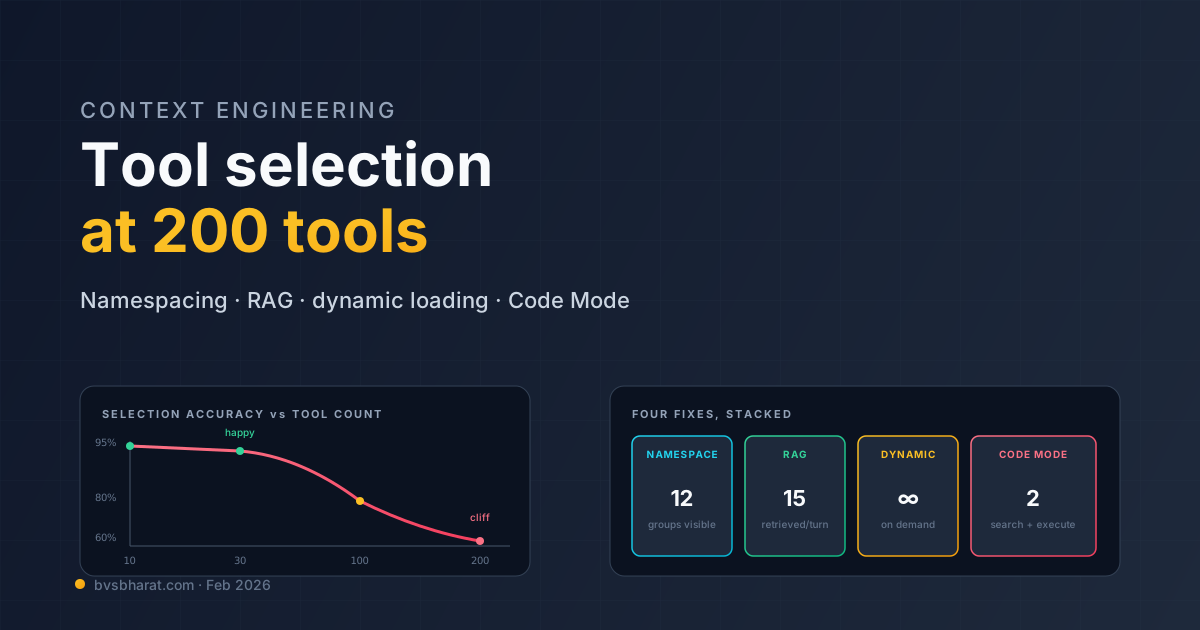
Tool Selection at Scale: When Your Agent Has 200 Tools
• 9 min readPast ~30 tools, agent reliability falls off a cliff. Past ~100, it's chaos. Here's the actual engineering — RAG-over-tools, semantic routing, dynamic loading, and namespacing — that production teams ship to stay sane.
-
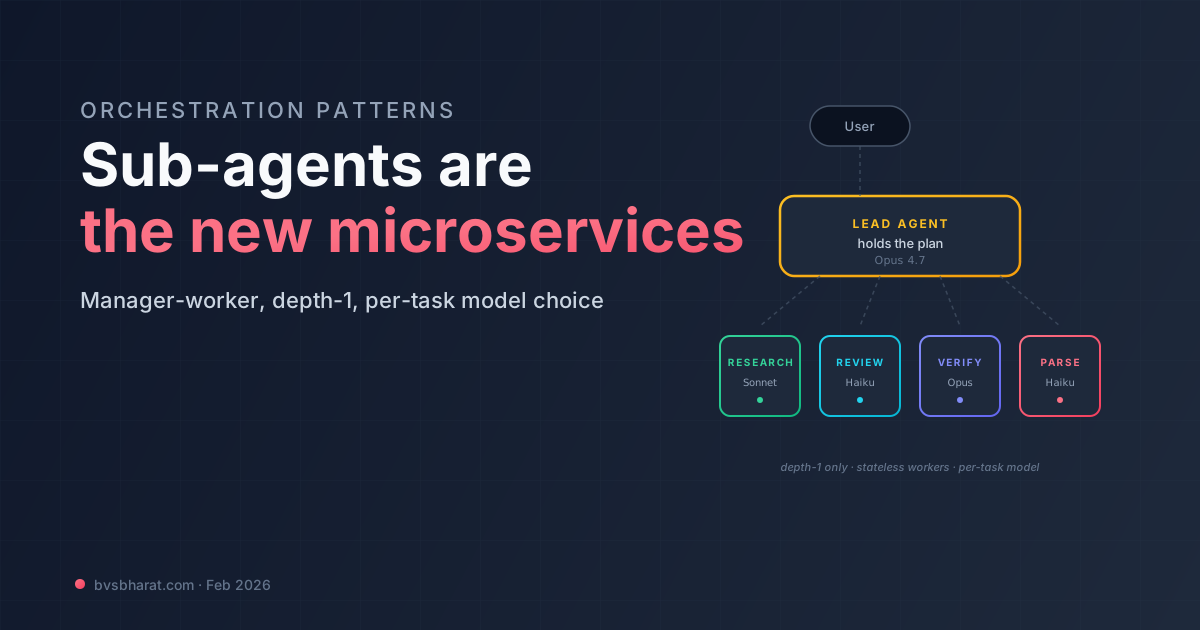
Sub-Agents Are the New Microservices
• 9 min readThe orchestrator-worker pattern that took over agent design in late 2025 is the same pattern that took over backend design in 2014. The wins are real. So are the failure modes.
-
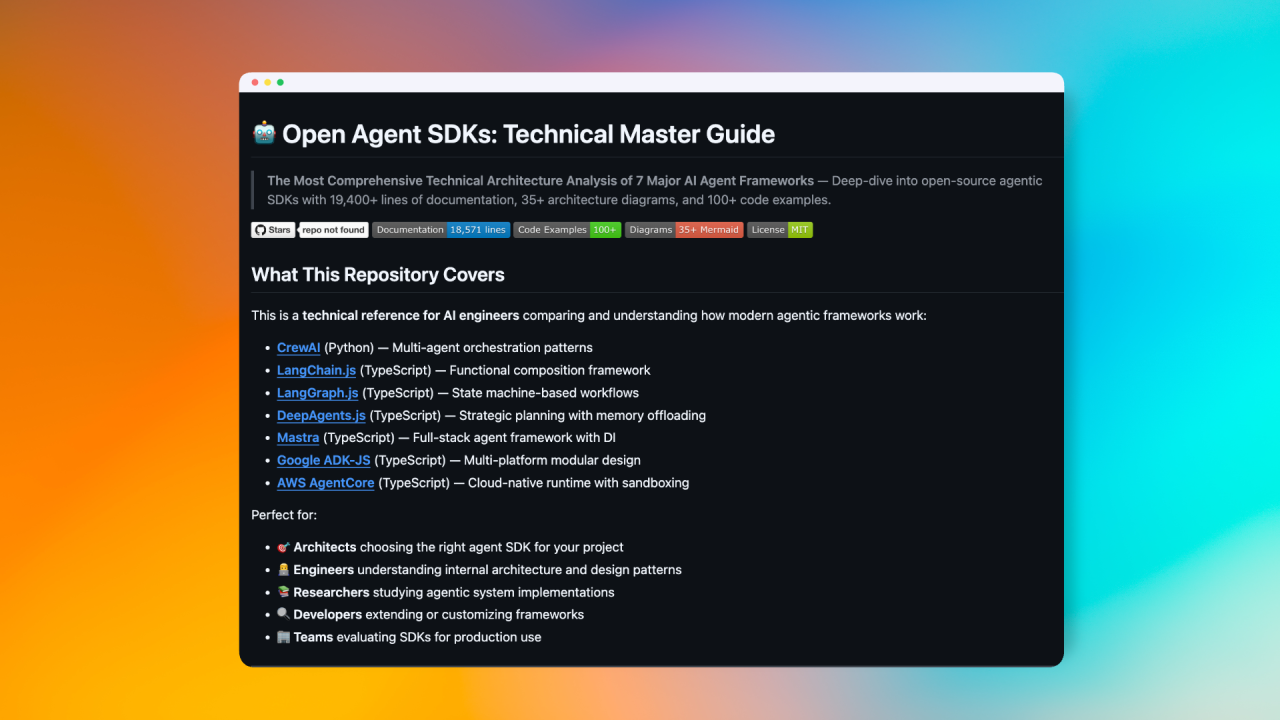
I Tested Every Major Open-Source AI Agent SDK So You Don't Have To
• 2 min readA comprehensive hands-on comparison of seven open-source AI agent frameworks — which one should you actually use?
-
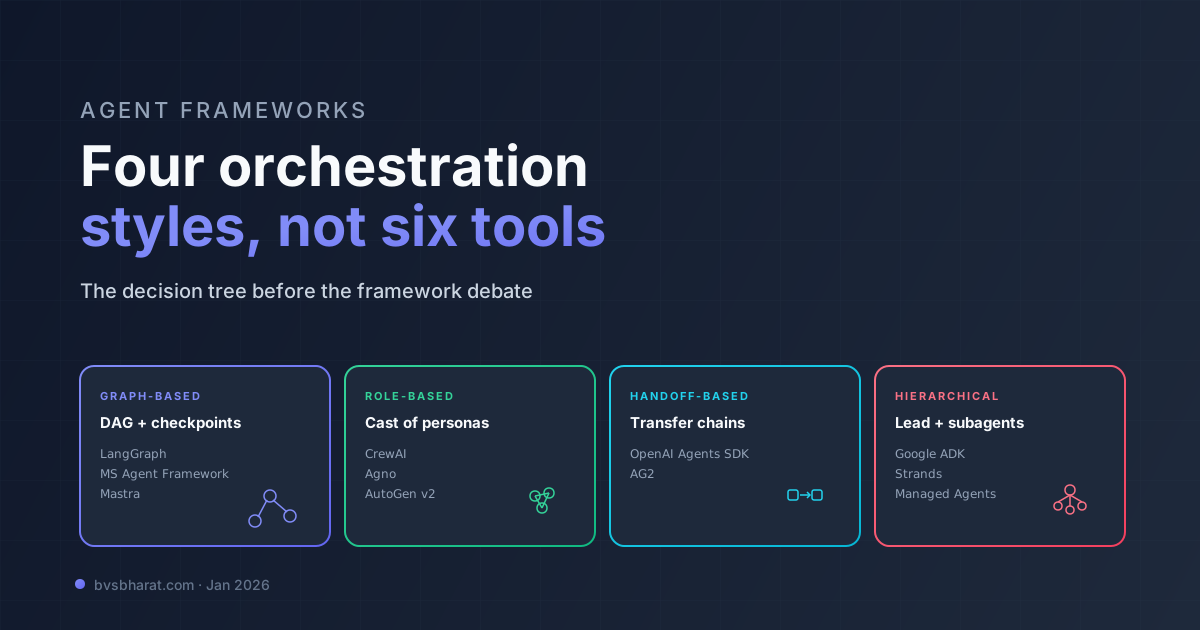
Choosing an Agent Framework in 2026: A Decision Tree
• 9 min readSix serious frameworks, four orchestration styles, and one tired question I keep getting asked. Here's the decision tree I actually use.
-
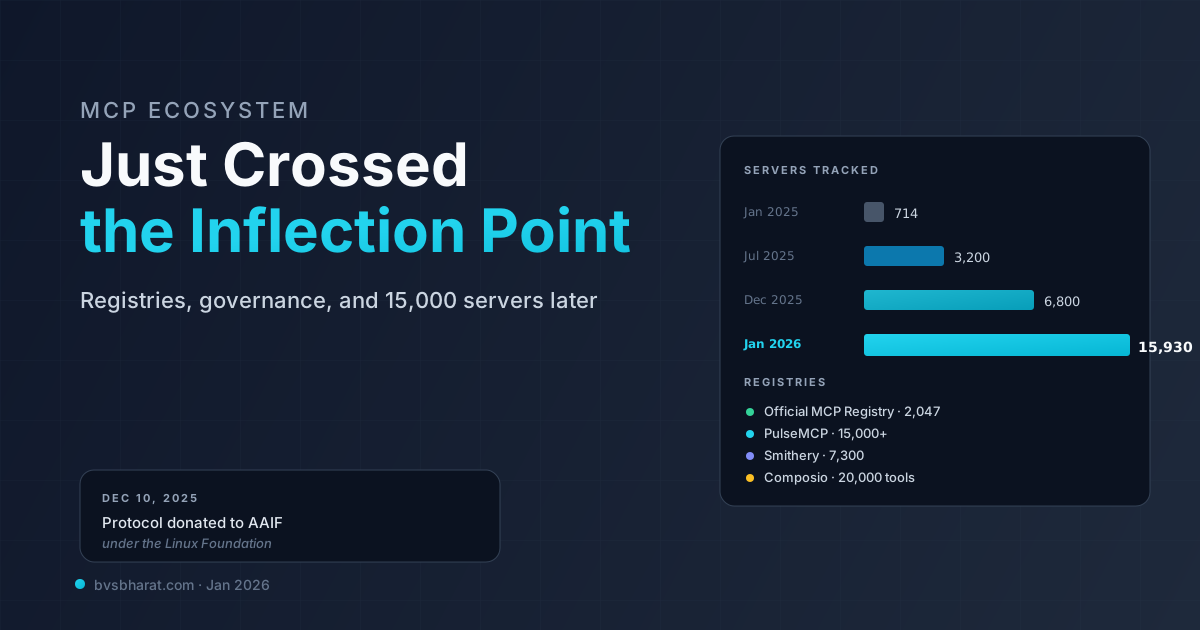
MCP Just Crossed the Inflection Point
• 7 min readFourteen months in, the Model Context Protocol stopped being a curiosity and started being plumbing. Here's what changed over the holidays — registries, governance, and the first scaling pains.
-
JARVIS: Building an Agentic AI System for IoT Control
• 2 min readOpen-sourcing my childhood dream — an AI agent that understands context, makes decisions, and controls connected devices just like JARVIS.